Monday, November 30, 2020

Adsvent II B

File:Mengs, Hl. Johannes der Täufer.jpg - Wikimedia Commons 


2nd Sunday of Advent B


Readings: Isaiah 40:1-5,9-11    2 Peter 3:8-14           Mark 1:1-8


Semper paratus! “Always prepared!” This motto describes the mood of the readings for the Second Sunday of Advent.  John the Baptist, the messenger and herald in the wilderness, alerts us to be prepared for the arrival of the One who will bring God’s creative Spirit to make all things new.  With confidence, let us pray the lyrics of the responsorial psalm.  “The Lord will make us prosper/ and our earth shall yield its fruit.  Justice shall march before him/ and peace follow his steps” (Ps 85:14).

The first reading is the commissioning of the prophet scholars call Second Isaiah.  He is given the task to prepare the weary Jewish exiles in Babylon for God’s glorious action in bringing them home to Jerusalem.  Without the preparatory message of this “herald of glad tidings,” the exiles might never have understood that their release from Babylon by Cyrus, the King of the Persians, was God’s saving action in their behalf.  The prophet is called to ready this people by proclaiming “comfort” to Jerusalem which has paid double for her past sins and will now see her Lord God bringing home his flock like a shepherd gathering his lambs.  In the imaginative poetry of the prophet, the way home from Babylon to Jerusalem will be a super highway across the Arabian desert.  “In the desert prepare the way of the Lord!  Make straight in the wasteland a highway for our God!”

Sometimes an event which we most eagerly anticipate is delayed by circumstances beyond our control, causing us to lose the fervor of our initial anticipation.  The Second Peter reading challenges those who are disappointed by the delay of Jesus’ expected return in glory.  Some Christians, concluding that Jesus will never come in judgment, are leading dissolute lives (see 2 Peter 2).  Second Peter reminds them that God’s time table is different from humans and that what appears as a “delay” should be grasped as an opportunity for “all to come to repentance.”  In the time of waiting, the letter exhorts Christians to be people of exemplary conduct whose lives hasten the arrival of God’s kingdom, the “new heavens and new earth where, according to his promise the justice of God will reside.”

Mark’s presentation of John the Baptist in our Gospel both calls us to repentance in preparation for the arrival of God’s kingdom and alerts us to expect the mighty action of God’s Spirit with the coming of Jesus.  Although Mark attributes the opening prophecy to Isaiah, it is actually a combination of elements from Exodus 23:20, Malachi 3:1, and Isaiah 40:3.  John the Baptist is identified with Elijah, the messenger expected in the apocalyptic Book of Malachi, who will return to prepare the way for God’s final judgment by his sudden appearance in the Temple.  Contrary to Malachi’s expectations, John appears in the Judean wilderness where his message is like that of Second Isaiah: “Make ready the way of the Lord,/ clear him a straight path.”  But John’s “baptism of repentance which led to the forgiveness of sins” is only preparatory to the theme of his preaching. John proclaims: “One more powerful than I is to come after me. I am not fit to stoop and untie his sandal straps. I have baptized you in water; he will baptize you in the Holy Spirit.”

John’s proclamation is the beginning of the “gospel,” the good news of Jesus the Christ, the Son of God.  It prepares us for the powerful wonders Jesus will perform in the early chapters of Mark’s Gospel where he will authoritatively gather a group of apostles and begin to attack the evil dominion of Satan with the healings, exorcisms, and the proclamation of forgiveness to outcasts.  At this stage, the initial reader would never guess that the story of this gospel will entail the violent deaths of both John, at the hands of Herod Antipas, and Jesus, at the hands of Pilate.  Later in the Gospel, Jesus will explicitly link his fate with John’s.  When Peter, James and John descend from the mount of transfiguration, they ask Jesus, “Why do the scribes say that Elijah must come first?”  Jesus answers, “Elijah will indeed come first and restore all things, yet how is it written regarding the Son of Man that he must suffer greatly and be treated with contempt?  But I tell you that Elijah has come and they did to him whatever they pleased, as it is written to him.”  In choosing to follow John and Jesus we choose the path that leads to the cross.

Monday, November 23, 2020

A New Liturgical Year! A new gospel, Mark! A new seaon! Advent I


 1st Sunday of Advent B


Readings: Isaiah 63:16-64:7   1 Corinthians 1:3-9     Mark 13:33-37


We all know what it’s like to await the return of a loved one.  During Advent the whole Christian community waits in partial darkness, but also in hope and trust, for the Second Coming of our light: Jesus the Messiah.  The liturgy for the First Sunday of Advent in the B Cycle confronts us with our sin and need for God but also challenges us to await Christ’s return in hope.  We pray in the words of the Entrance Antiphon: “No one who waits for you is ever put to shame.”

The Isaiah reading is a lament pleading that God save the Jewish community which has just returned from exile in Babylon.  Haunted by guilt over their sin, the returning exiles, through the voice of the prophet, beg in desperation that the Lord come in a mighty theophany as on Mount Sinai: “Oh, that you would rend the heavens and come down,/ with mountains quaking before you. . .”  They pray that the Lord will find them living justly.  “Would that you might meet us doing right/ that we were mindful of you in our ways!”   Although tortured by guilt over sin, the returning exiles must have a deep confidence in the Lord who has saved them in the past.  The prophet both confesses the nation’s sins and places absolute trust in God’s care: “We have all withered like leaves,/ our guilt carries us away like the wind./ . . . O Lord, you are our father;/ we are the clay and you are the potter;/ We are all the work of your hands.”

The second reading from the thanksgiving section in Paul’s First Letter to the Corinthians captures the mood of the Church during Advent.  We Christians live in hope because of the gift of salvation brought by Jesus’ death and resurrection, but we also confidently await his future return in power.  We, like the Corinthians, have been “richly endowed with every gift of speech and knowledge,” and therefore we can trust that we will “lack no spiritual gift” as we “wait for the revelation of our Lord Jesus.”  But our challenge is to be found “blameless on the day of our Lord Jesus Christ.”

The Gospel reading for the First Sunday of Advent always dove tails with the readings at the end of the previous Church year because they are about Jesus’ second coming to complete the Kingdom of God.  During this year’s B cycle of readings, we will read Mark’s Gospel, and so this Sunday gives us part Mark’s version of Jesus’ apocalyptic sermon to his disciples at the end of his public ministry in Jerusalem.

The setting is ominous.  Jesus has just cleansed the temple and been engaged in violent controversy with the temple leaders over his authority for this prophetic action (see Mark 11-12). Now he and his disciples have left the temple, and when they express admiration for its building, Jesus announces, “Do you see these great buildings?  There will not be left here one stone upon another, that will not be thrown down.”  When Mark is writing his gospel, these events have probably already happened, as the Romans destroyed the Jerusalem temple in 70 A.D. during the Jewish-Roman war.

In the first part of his sermon Jesus warns his disciples about wars and persecutions that will threaten them from without and the false prophets and messiahs from within the community who will attempt to lead them astray.  Despite the apparent signs of the end time, Jesus insists that the day or the hour is known only to God.   Therefore he urges the disciples to be alert and watchful like servants put in charge by a master who travels abroad or like a doorkeeper who is to open to the master of a house upon his return at some unknown hour of the night.  Although these images emphasize the need for being watchful, they do not provoke anxiety.  The completion of the kingdom will be the work of the returning Son.  Each disciple is only expected to be doing the assigned task.  There may be no better way to keep Advent than to be attentive to our assigned duties as we long for the return of our Master.

Tuesday, November 17, 2020

Our Lord Jesus Christ, King of the Universe Year A


Christ the King A


Readings: Ezekiel 34:11‑12,15‑17  1 Corinthians 15:20‑26,28  Matthew 25:31‑46


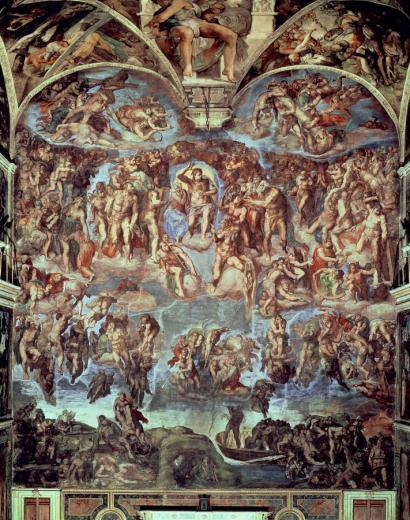
            The Feast of Christ the King marks the end of the liturgical year with readings that speak of Christ's triumph over sin and death and the final judgment in which he as shepherd will separate the nations, like sheep and goats, on the basis of their kindness to his suffering brothers. With confident faith, let us pray for the completion of Christ's kingdom of peace and justice in the words of the responsorial psalm: "The Lord is my shepherd; there is nothing I shall want" (Ps 23). 

            Ezekiel's shepherd allegory speaks of the Lord God coming to rescue the strayed and lost sheep and to destroy "the sleek and the strong" who have abused them.  The prophet was living with the Jewish exiles in Babylon, and in the first part of his allegory he denounces Judah's latest kings and leaders as "shepherds . . .  who have been pasturing themselves" and fleecing the flock entrusted to them.  Because of their selfish rule, the nation has gone into exile; its people have been "scattered for lack of a shepherd and become food for the wild beasts."  But now, through Ezekiel, God announces, "I myself will look after and tend my sheep."  God will restore the nation from exile; the lost and strayed sheep will be sought out and brought back; the injured and sick will be bandaged and healed.  "The sleek and the strong," who have taken advantage of their weaker brethren, will be destroyed, as the Lord God judges "between one sheep and another, between rams and goats." 

     In the 1 Corinthians reading, Paul is responding to those who claim that Christians already live in a resurrected state and that there will be no resurrection of the body at the end time.   Paul argues that Christ's bodily resurrection is the heart of the Christian good news, and, in this section, he insists that the resurrected Christ is like the first fruits of a harvest which will affect all humanity.  Paul understands Christ as the new Adam: as "death came through a man (Adam)," so resurrected life has come through the new man, Christ.  In the interim between Christ's resurrection and the final resurrection, "Christ must reign until God has put all enemies under his feet . . ."   The greatest and "last enemy to be destroyed is death" which has already been defeated in the resurrection of Christ.                                                                                      

            Jesus concludes his final discourse in Matthew with the scene of the Last Judgment (Mt 25:31-46) in which acts mercy will be the criteria by which all will be judged. When the nations are assembled before him as the glorious Son of Man seated upon his throne, they will be separated like sheep from goats and blessed or cursed by the mercy or neglect they have shown to the hungry, thirsty, strangers, naked, sick, and prisoners—the traditional corporal works of mercy in the Jewish and Christian traditions.    The surprising feature of the judgment is that in showing mercy for or neglecting these needy they have been encountering Jesus himself who in his public ministry has identified himself with the poor and suffering and who has come “not to be served but to serve, and to give his life as a ransom for many” (20:28). “Truly I tell you, just as you did it to one of the least of these my brothers, you did it to me.”  Jesus is truly Emmanuel, God with us, present in the neediest of all until he returns in glory.

Wednesday, November 11, 2020

33rd Sunday A


33rd Sunday of Ordinary Time A


Readings: Proverbs 31:10‑13,19‑20,30‑31  

1 Thessalonians 5:1‑6   Matthew 25:14‑30


As we approach the close of the liturgical year, the readings continue to remind us that we are to be "children of the light," engaged in wise and productive activity in anticipation of our Master's return.  The responsorial psalm promises that those "who fear the Lord" by walking in his ways will be happy and will enjoy the fruit of their labors (Ps 128).

The reading from Proverbs is part of an alphabetic acrostic poem (each verse begins with a successive letter of the Hebrew alphabet) in praise of the worthy wife.   It is the conclusion of Proverbs and echoes the themes of the entire book where Wisdom is personified as a Lady who is to be courted by young men.  The "worthy wife" is the practical and concrete "incarnation" of the divine and exalted figure of Lady Wisdom (see Proverbs 1‑9). 

The poem begins by praising her inestimable value to the husband who finds her: "When one finds a worthy wife,/ her value  is beyond pearls."  Her gifts come from her ceaseless activity in providing clothing, food, economic security, and wise counsel for both her own household and the needy.  Such concrete and practical care for others is what Proverbs means by "fear of the Lord."  The poem ends by contrasting the deceptive and fleeting character of charm and beauty with the enduring worth of "the woman who fears the Lord." 

In the reading from 1 Thessalonians, Paul continues to address their concerns about "the day of the Lord" when Jesus will return in glory.  Paul does not want them to speculate about "specific times and moments."  They already know "that the day of the Lord is coming like a thief in the night."  Jesus' sudden return, however, should not cause anxiety.  Using an apocalyptic contrast between darkness/night and light/day, Paul reminds the Thessalonian Christians that they are different from the children of darkness who live with a false sense of security, like people who are asleep or drunk.  As the "children of the light and day," Christians should not be caught "off guard," because they are "awake and sober."  Paul goes on to describe this sobriety as living a life of faith, love and hope‑‑ the very virtues he praised the Thessalonians for at the beginning of the letter (see  1 Thess 1:2‑3).

The Gospel parable of the talents continues Matthew's theme of the need for responsible behavior by the church when the Master's return is delayed.  The disciples are challenged by a parable about servants who are entrusted with funds by a very demanding master while he goes on a long journey.  They are to see themselves in the servants, because they too have been left in charge of the Christian community after Jesus' resurrection.

The three servants are given amounts of money ‘according to each man's abilities,’ but they are judged on the basis of whether they prove to be ‘industrious and reliable’ while the master is gone.  The servants who received five thousand and two thousand talents ‘invest’ their money and thereby double the master's funds.  Upon his return, he praises and rewards them: “Well done! You are an industrious and reliable servant. Since you were dependable in a small matter I will put you in charge of larger affairs.  Come, share your master's joy.”  The third servant, however, is paralyzed by fear of failure and brings the master no return upon his gift.  He really condemns himself in his speech to the master.  “My lord, I knew you were a hard man.  You reap where you did no sow and gather where you did not scatter, so out of fear I went off and buried your thousand silver pieces in the ground.  Here is your money back.” He is summarily condemned by the severe master as a "worthless, lazy lout."  His money is taken away, and he is thrown "into the darkness outside."

In Matthew's earlier missionary discourse to the disciples (Matthew 10), we learn that the threat of persecution and suffering for the preaching of the gospel may cause the disciples to fear (Mt 10:16‑33), but Jesus consoles them with the following words. “And do not be afraid of those who kill the body but cannot kill the soul; rather, be afraid of the one who can destroy both soul and body in Gehenna.  Are not two sparrows sold for a small coin?  Yet not one of them falls to the ground without your Father's knowledge. . . . So do not be afraid; you are worth more than many sparrows.” (Mt 10:28‑31).

Monday, October 26, 2020

Nov. 1st All Saints Day


All Saints (November 1)


Readings: Revelation 7:2-4, 9-14  1 John 3:1-3  

Matthew 5:1-12


            The feast of All Saints marks a shift in the character of the readings proclaimed in Ordinary Time from the theme of the Christian community’s growth in grace to a concern with the last things.  The readings for all Saints reflect the feast’s original character as a celebration of Christian martyrdom in connection with the Easter season; they present the challenge of a way of life modeled on Jesus and the great heroes of the faith in the context of belief in the ultimate triumph of God’s kingdom over sin and death.

            The reading from Revelation 7 offers a consoling vision of the future that awaits the saints who have endured trial and persecution from the powers of evil in the present world order.  Revelation is an apocalyptic work written in the late first century C.E. by the prophet John of Patmos for seven churches in Asia Minor who were faced with Jewish hostility, public suspicion, sporadic Roman prosecution, imprisonment and even execution.  Many believers were tempted to renounce their belief in Christ and conform to the decadence of Roman society.  John’s visions of God and the Lamb’s ultimate triumph over the forces of evil, especially Rome, are meant to strengthen Christians whose faith was wavering, by assuring them that death for Christ is not defeat but victory.

            Revelation 7 is part of the vision of the seven seals (6:1-8:6).  In an interlude between the sixth and seven seals, John describes two visions which assure the faithful that they are protected from God’s judgment.  Following a pattern found in Ezekiel 9, John describes the instructions for sealing the servants of God (the faithful) before the four angels ravage the land and sea.  A symbolic full number of 144,000 from every tribe of Israel are so marked.  In the second vision, John sees a huge crowd from every nation, race, people and tongue joyfully participating in the heavenly liturgy before the throne of God and the Lamb (the crucified and resurrected Jesus).  They are dressed in long white robes of glory and are holding the palm branches of victory in their hands.  The vision’s climax comes when John learns from one of the elders that “these are the ones who have survived the great period of trial; they have washed their robes and made them white in the blood of the Lamb.”

            The second reading from 1 John 3 is a theological reflection and exhortation based on what God has bestowed on Christians through the act of divine love given in Christ.  In the tender language of first-person plural address, the author reminds us that we are already “children of God,” and though the mystery of what we shall later be has not yet come to light, we may be confident that we shall see God as God is.  This hope should give us the assurance to keep ourselves pure, that is, to love one another as Christ has loved us, in the face of the world’s hostility which does not recognize us just as it failed to recognize the Son.

            The Gospel is the beginning of Matthew’s Sermon on the Mount, the first of the evangelist’s five great discourses proclaiming the prophetic fulfillment of God’s law (Matthew 5-7).  The setting and tone are solemn and apocalyptic.  Jesus goes up a mountainside, a place of revelation like Sinai in the Book of Exodus (Exodus 19-40).  Seating himself in the position of teacher, he proclaims the fulfillment of the law in the way the Lord first announced the law on Sinai (Ex 20:1-17).  His disciples will have the role of Moses: handing down the revelation to the nations (Matt 28:16-20).

            Jesus’ proclamation begins with the beatitudes, a joyful announcement of God’s final blessing for the `anawim who totally depend on God for their vindication.  Five of the beatitudes reflect what might be called “passive” qualities: being spiritually poor, mourning over evil, hungering for justice and being persecuted for righteousness.  Three are more active: showing mercy, being single-hearted and making peace.  All mirror Mathew’s Jesus, the truly happy person who embodies the joy the kingdom brings and, obediently trusting his Father, suffers death for the sake of the kingdom (see Matt 10:24-42; 11:25-30).  All the saints are those who have followed in Jesus’s footsteps.

Monday, October 19, 2020

30th Sunday A

 Love God and love your neighbours "Cook... - MLGV - Make Love Go Viral |  Facebook

30th Sunday in Ordinary Time A


Readings: Exodus 22:20‑26  1 Thessalonians 1:5‑10

Matthew 22:34‑40 


            In today's Gospel Jesus, facing an extremely hostile situation, teaches that the whole of the Jewish Torah and the teaching of the prophets can be summarized in the twofold command to love God and neighbor.  Because the love of God cannot be separated from the command to love the neighbor, the Lord's Torah is a source of protection for the weak and needy.  Let us thank God for the gift of the Torah in the words of the responsorial psalm: "I love you, Lord, my strength" (Ps 18). 


            The laws in our Exodus reading are from the Book of the Covenant which is a law code designed for Israel's settled agricultural life in the land of Canaan.  They all protect the rights of the weakest members of ancient society.  Israelites are forbidden to molest resident aliens; they are not to wrong widows and orphans, and they are not to demand interest from the poor who are forced to go into debt.  Two reasons are given for these laws.  First of all, the Israelites should remember their own experience of being oppressed aliens in Egypt.  Secondly, God is compassionate, and therefore he hears the cries of the oppressed and will act to vindicate them.

            In the reading from Thessalonians Paul continues his defense of his apostolic work in that community by recalling the great success that his preaching of the gospel had among them.  He goes on to praise them for "receiving the word despite great trials."   He notes that they have become a model for the churches in Macedonia and Achaia because of their sincere conversion from idolatry to the service of the one "living and true God" as they await the return of the resurrected Jesus. 

            The Gospel continues the controversies between Jesus and the religious leaders in the Temple which have been the subject of our readings from Matthew for the last several Sundays.  In this week's gospel reading the Pharisees, having heard Jesus silence the Sadducees in a debate about resurrection, "attempt to trip him up" on a matter of major concern to them: the importance of the Mosaic Torah.  A lawyer, representing the Pharisees, asks him, “Teacher, which commandment of the law is the greatest?”   One must remember that the Torah contains 613 precepts.  Some rabbis held that all were equally important, while others offered some sort of summary or gradation of the commands.  Jesus' answer is deeply rooted in the traditions of his people.  He names as the greatest command the love of God demanded in the greatest Jewish prayer, the Shema`: "Hear, O Israel . . . You shall love the Lord your God with your whole heart, with your whole self, and with all your mind" (Deut 6:4‑5).  Jesus then goes on to link this to a second command taken from  the Holiness Code in the Book of Leviticus: "You shall love your  neighbor as yourself" (Lev 19:18).  For Jesus these commands are the two pegs on which hang the whole of the Torah and the prophets.  All their teachings are founded on these two commands, and all the details of the Torah legislation are reducible to them.  When we are confused by the endless controversies and hostilities that tend to swirl around religion, Jesus' simple and straightforward teaching provides a welcome guide.

Monday, October 12, 2020

29th Sunday A


Newer, Ancient-like Coin - "DICTATOR FOR LIFE" Gaius, Julius Caesar - AN  EXQUISITE TRIBUTE!29th Sunday of the Year A


Readings: Isaiah 45:1, 4‑6  1 Thessalonians 1:1‑5  Matthew 22:15‑  21


            Throughout much of the biblical period the Jewish people were dominated by various foreign powers: Assyria, Babylon, Persia, the Greeks, and finally Rome.  In today's readings both Second Isaiah and Jesus offer us visions of how God's power and demands are operative, even in situations where the chosen people have no political power.  As we listen to the wonders of God's power in shaping human events for his saving purposes, let us acknowledge his greatness in the words of the responsorial psalm: "Give the Lord glory and honor" (Ps 96).

            The Isaiah reading is the famous Cyrus oracle of Second Isaiah in which the prophet announces that the Persian king Cyrus is God's "anointed" agent for freeing the exiled Jews from their captivity in Babylon.  Although Cyrus does not even know the Lord's name, from the prophet's perspective, his victories over nations, including Babylon, are the Lord's actions "for the sake of Jacob, my servant, of Israel, my chosen one."  

            The prophet's vision separates God's saving plan from Israel's political ambitions.  Many exiles may have preferred a Jewish deliverer like Moses or David, but Second Isaiah daringly gives the pagan king, Cyrus, the title of "anointed" or Messiah.   If God can use an unbelieving, foreign king to further his saving purposes, then Israel's task is not to become a great political power.  Rather, she is called to be a "servant" and "witness" to the one true God (see chapters 42, 44-45, 53). 


            For the next several weeks, the Epistle reading will be taken from the first letter of Paul to the Thessalonians, probably the earliest writing in the New Testament.  This Sunday we have Paul's greeting at the beginning of the letter.  Because of tensions within the community, Paul had to leave Thessalonica rather abruptly, and therefore in the traditional thanksgiving section, he assures the Thessalonian Christians of his continued union with them in prayer and encourages them to maintain their commitment to the Christian virtues: faith, love and hope. “We keep thanking God for all of you and we remember you in our prayers, for we constantly are mindful

before our God and Father of the way you are proving your faith, and laboring in love, and showing constancy in hope in your Lord Jesus Christ.”

            There has also been some criticism of Paul since his departure, and, therefore, he begins to defend the way in which he preached the gospel among them.  Paul insists that his preaching was not a matter of mere rhetoric but an authentic proclaming of the gospel. “Our preaching of the gospel proved not a mere matter of words for you but one of power; it was carried on in the Holy Spirit and out of complete conviction.”

            This Sunday's Gospel continues the controversies between Jesus and the religious leaders who are attempting to "trap him in speech" during his last days in Jerusalem.  The question of paying taxes to the Roman emperor is raised by two groups who had very different views on the question.  The Pharisees, as devotees to the Jewish written and oral law, opposed the tax because it forced them to admit Israel's subjection to pagan Rome and to use coinage bearing the image of Caesar.  But the Herodians, who supported the descendants of Herod the Great, advocated cooperation with Rome.  In this situation, Jesus apparently cannot win, when the disciples of the Pharisees ask: “Is it lawful to pay tax to the emperor or not?”  Jesus exposes the hypocrisy of the Pharisees by asking them for a coin of tribute.  He does not carry such coins; they do.  His question goes on to intimate that to carry such coins, bearing Caesar's image, is to cooperate with the emperor’s rule. "Why are you trying to trip me up, you hypocrites? Show me the coin used for the tax . . . Whose head is this, and whose inscription?" The Pharisees are forced to say the image is “Caesar's,” and they thereby concede that they recognize the claims of Rome on their lives.  This makes the meaning of Jesus' final challenge something like this.  Because you carry Caesar's coin, it is clear that you "render to Caesar what is Caesar's," but I challenge you hypocrites to "give to God what is God's."  


            Throughout Christian history many have been tempted to identify a particular political cause with God's will.  Jesus' challenge forces us to be aware that God's demands and purposes transcend any particular political project.