Monday, May 3, 2021

Easter VI B

Jesus' Last Words Of Comfort To The Apostles6th Sunday of Easter B


Readings: Acts 10:25-26,34-35,44-48  1 John 4:7-10  John 15:9-17


This Sunday’s readings celebrate God’s love for us in Christ which breaks through the barriers that separate us from God and one another.  In the first reading, Peter learns that the old boundaries that divided Jew and Gentile have been erased by the gift of the Holy Spirit.  And in the Gospel, Jesus announces to his disciples that they are no longer slaves but friends, if they live his command to love one another.  In light of this good news, we can joyfully sing the refrain of the responsorial psalm: “The Lord has revealed to the nations his saving power” (Ps 98).

The Acts reading recounts part of the long episode in which Peter for the first time takes the gospel message into the Gentile world by baptizing the household of Cornelius, a devout Roman centurion (Acts 10:1-49).  Peter is simply responding to God’s initiative in this matter.  Previously, an angel had told Cornelius that his prayers and almsgiving had ascended as a memorial offering before God and that now he should send messengers to Peter in Joppa (Acts 10:1-8).  In the meantime, Peter has his own vision informing him that the foods considered unclean by the Jewish law are now declared clean (10:9-16).  When Cornelius’ messengers arrive, Peter goes with them to Caesarea where he learns of Cornelius’ initial vision (10:17-33).  This moves him to declare:  “I begin to see how true it is that God shows no partiality.  Rather, the man of any nation who fears God and acts uprightly is acceptable to him” (Acts 10:34-35). 

After Peter’s sermon announcing the good news of forgiveness of sin in the name of the risen Jesus (10:36-43), the Holy Spirit descends upon all who were listening and the Gentiles begin speaking in tongues and glorifying God as the Jewish disciples had at Pentecost (10:44-46; Acts 2:1-13).  Peter then again affirms God’s action by ordering that this Gentile household be baptized.  “What can stop these people who have received the Holy Spirit, even as we have, from being baptized with water?” (10:47).


The reading from 1 John also highlights God’s initiative in sending his only Son to give us life through him.  In the Johannine writings the command to love one another is not given as a starting point in the community’s relationship to fellow members and God.  Rather, the love command follows as a response to God’s love in saving us from sin by the redemptive death of his Son.  “Love, then, consists in this: not that we have loved God, but that he has loved us and has sent his Son as an offering for our sins” (1 John 4:10).

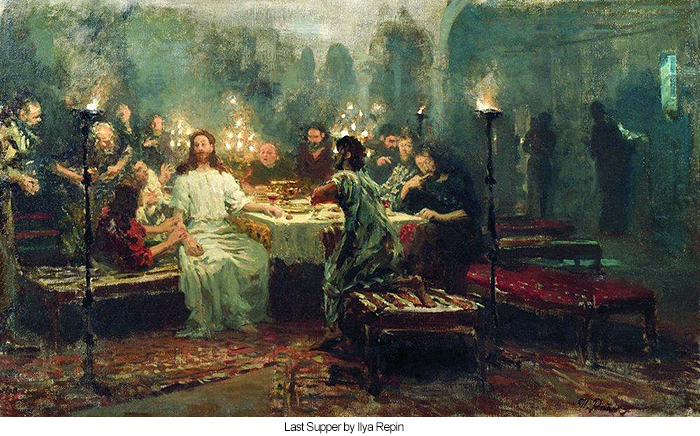
The Gospel reading continues the vine and branches portion of Jesus’ farewell discourse in John which was begun last week.  This section also stresses God’s initiative in loving us in Jesus.  Jesus says to his disciples, “It was not you who chose me, it was I who chose you to go forth and bear fruit.”  God’s loving choice brings with it special gifts.  Jesus informs his disciple that by their love of one another they now share in the very love of the Father and the Son.  “As the Father has loved me, so I have loved you.  Live on in my love.  You will live in my love if you keep my commandments, even as I have kept my Father’s commandments and live in his love.”  This love is also characterized by a sharing in the joy of Jesus himself in doing his Father’s will.  “All this I tell you that my joy may be yours and your joy may be complete.  This is my commandment: Love one another as I have loved you.”  Finally, sharing in the self-sacrificing love of Jesus changes the disciples’ relationship to God from that of slaves, who do not know the master and serve only out of fear and duty, to that of friends, who respond out of love.  “You are my friends if you do what I command you.  I no longer speak of you as slaves, for a slave does not know what his master is about.  Instead, I call you friends since I have made known to you all that I heard from my Father.”


Monday, April 26, 2021

Easter V B


ArtWay.eu 

5th Sunday of Easter B


Readings: Acts 9:26-31  1 John 3:18-24  John 15:1-8


The readings for the Fifth Sunday of Easter present a perennial challenge of Christian faith: how to maintain unity in a community frequently rent by division, suspicion, endless theoretical discussion, and lack of fidelity.  Only in the crucified and risen Christ, who joins us to the Father, do we find the strength to be united to one another in courageous and charitable deeds.  Having struggled with the divisions that mark our lives as Christians, let us find in the glorified Christ the power to pray the words of our responsorial psalm: “I will praise you, O Lord, in the assembly of your people” (Ps 22).

The first reading from Acts continues the twin Lucan themes of the Spirit’s guiding the apostles to fearless witness to the risen Christ and leading the Church to peace and unity, despite opposition.  Luke presents his version (contrast Galatians 1:18-20) of Saul/Paul’s potentially divisive return to Jerusalem as an example of how division can be overcome and lead to productive preaching of the gospel.  When Saul, the former zealous persecutor of the Church in Jerusalem (see Acts 7:58-8:3; 9:1-2), returns to the city after his call on the road to Damascus, the disciples there are understandably afraid of him and refuse to believe that he is a disciple of Christ.  To his great credit, Barnabas, who had earlier been an example of generosity in selling his farm and giving the proceeds to the apostles (Acts 4:36-37), now boldly takes the lead in introducing Saul to the Jerusalem apostles.  He explains that Saul “had seen the Lord (and) conversed with him” and had spoken out fearlessly in Jesus’ name in Damascus.  Barnabas’ courageous action bears immediate fruit.  Saul stays in Jerusalem with the apostles and continues to preach the gospel.  Ironically, he even takes up the mission of Stephen, in whose death he was something of an accomplice, by debating Greek-speaking Jews, who try to kill him as they did Stephen.  Again, communal charity triumphs over potential disaster when “the brothers” take Saul down to Caesarea and send him off to Tarsus.  The incident is followed by an idyllic summary of the peaceful growth of the church in Judea, Galilee and Samaria. “The church throughout all Judea, Galilee, and Samaria was at peace.  It was being built up and walked in the fearof the Lord, and with the consolation of the Holy Spiritit grew in numbers.”


The second reading from 1 John addresses the problem of the foundation for true Christian fellowship.  For some reason (incipient Gnosticism?), members of John’s community were debating how to “know” if they were still committed to the truth of salvation through the death and resurrection of Christ (1 John 3:18-19).  The author of 1 John cuts through their confusion by offering simple, straightforward advice based on the teaching of Jesus in the farewell discourse of John’s gospel (John 13-17).  He exhorts the community as “little children” to love “in deed and truth and not merely talk about it,” and he assures them that their consciences will have nothing to charge them with before God if they believe in the name of his Son, Jesus Christ, and love one another as he commanded (John 14:13f; 13:34; 15:17).  Those who keep Jesus’ love command have the indwelling presence of God and the gift of his Spirit which he promised in the farewell discourse (John 14:11ff).  The signs of the Spirit’s presence are not the spectacular apocalyptic marvels usually associated with the Messianic age (e.g. Acts 2:17ff; Joel 3:1-5), but concrete acts of charity.  In the previous section (3:11-17) the author of 1 John illustrates what is meant by love of the brethren.  It is not an emotional feeling of affection, but simple communal charity modeled on Jesus’ love in laying down his life for us. “We too must lay down our lives for our brothers.”  Cain, who killed his brother, is the antithesis of Christian love, and “anyone who hates his brother is a murderer.”  The test of true knowledge of God is the answer to a very simple question: “I ask you, how can God’s love survive in a man who has enough of this world’s goods yet closes his heart to his brother when he sees him in need?” (3:17).

The Gospel reading from Jesus’ farewell discourse in John uses the beautiful allegory of the vine and branches to speak of another aspect of the mystery of Christian unity: Jesus brings about the union between his Father and his disciples, and they must abide in him in order to bear fruit.  Jesus proclaims to his disciples that the source of unity is “the word I have spoken to you” (John 15:3,7).  Reception of this word makes the disciples “fruitful” and “clean” branches in contrast to the barren ones who are pruned away by the Father (15:3).  Continued fidelity to this word assures the disciples that they will bear much fruit and not become withered branches to be cut off and thrown into the fire (15:8).

What is “the word I have spoken to you”?  The essence of Jesus’ word of revelation in John is that the Father has loved him and has extended that love to his disciples who are to now live in it by keeping his commandments. “As the Father has loved me, so I have loved you.  Live on in my love.  You will live in my love if you keep my commandments, even as I have kept my Father’s commandments, and live in his love” (John 15:9-10). Love of Christians for one another is a sharing in the very love of the Father and the Son.

Monday, April 19, 2021

EASTER IV B


4th Sunday of Easter B


Readings: Acts 4:8-12 1 John 3:1-2 John 10:11-18


The fourth Sunday of Easter is often called Good Shepherd Sunday because the gospel readings are taken from John 10, Jesus’ discourse proclaiming: “I am the good shepherd.”  This Sunday’s readings also provide a good opportunity for reflection on Church leadership, modeled on Jesus, the shepherd who lays down his life for his sheep (John 10:15).  This act of self-emptying love in obedience to the Father becomes the source of life and unity in the Church.  In the words of the first reading and our responsorial psalm, Jesus is “the stone rejected by the builders, which has become the cornerstone” (Ps 118:22).

The first reading from Acts presents us with Peter’s fearless leadership of the apostolic witnesses in Jerusalem.  He and John have been arrested by the priests and temple leaders for proclaiming that their healing of a crippled beggar was done in the name of Jesus, whom God had resurrected, although they had rejected him (see Acts 3:1-4:4).  Remember that Peter had denied Jesus three times before the people in the courtyard during his master’s arrest and trial (see Luke 22:54-62).  But now, transformed by the Holy Spirit into a courageous witness, Peter proclaims before a hostile Sanhedrin the resurrected Jesus as the source of salvation for the whole world. “. . . you and all the people of Israel must realize that it (the cure) was done in the name of Jesus Christ the Nazorean whom you crucified and whom God raised from the dead.  In the power of that name this man stands before you perfectly sound. This Jesus is ‘the stone rejected by you the builders which has become the cornerstone.’  There is no salvation in anyone else, for there is no other name in the whole world given to men by which we are to be saved.”

The second reading from 1 John graphically illustrates the tension that marks the life of the Church.  On the one hand, in Jesus the Father has bestowed his love on us so that we are, in John’s language, “children of God.”  But on the other hand, the Church finds itself, like the Son, at odds with the world (the evil forces who refuse to recognize God’s love manifest in Jesus).  The author of 1 John assures his readers in tender language that finally their resemblance to the Son will culminate in union with God. “Dearly beloved, we are God’s children now; what we shall later be has yet to come to light. We know that when it comes to light we shall be like him.  For we shall see him as he is.”


The background for today’s Gospel reading is the Old Testament image of God and the kings of Israel as shepherds (see Ps 23; Jeremiah 23; Ezekiel 34).  Both Jeremiah and Ezekiel criticized the kings who have fleeced the flock of God’s people and caused them to be scattered in exile.  They looked forward to God’s tending the flock, gathering the scattered exiles and bringing them back to the land where they would be tended by a good shepherd king in the Davidic line.

The Gospel presents Jesus as the good shepherd in two ways that even go beyond the images in the prophets.  First of all, he “lays down his life for the sheep,” in contrast to “the hired hand,” who works only for pay and abandons the flock when he catches sight of the wolf coming.  Secondly, Jesus “knows” his sheep, that is, he loves them with the same love that the Father has for him.  The reason the Father loves Jesus is precisely because he will freely lay down his life for his sheep.  The result of this act of love will be that other sheep will be led into the one flock under the one shepherd.

Although John understood the image of the good shepherd as uniquely applicable to Jesus, in the Church’s tradition the self-sacrificing love of the Good Shepherd has also become a model for human pastors (see Gregory the Great’s Pastoral Rule).  One of the most memorable images of the faithful pastor is that provided by Chaucer in his description of the Poor Parson in “The Prologue to the Canterbury Tales.”  “Wide was his parish, with houses far asunder,/ But he would not be kept by rain or thunder,/ If any had suffered a sickness of a blow,/ From visiting the farthest, high or low/ plodding his way on foot, his staff in hand./ He was a model his flock could understand,/ for first he did and afterward he taught./ That precept from the Gospel he had caught. . .”

Monday, April 12, 2021


Christ is Risen! Part 6a. Who was the first witness? / Православие.RuDuccio di Buoninsegna, Christ's Appearance to the Apostles, ca. 1308-1311


3rd Sunday of Easter B


Readings: Acts 3:13-15,17-19  1 John 2:1-5  Luke 24:35-48


“In his name, penance for the remission of sins is to be preached to all the nations, beginning at Jerusalem.  You are witnesses of this.”  This commission, given by the risen Jesus to the apostles in Luke’s resurrection accounts, provides the focus for this Sunday’s readings.  Our joyful Easter faith in Jesus’ victory over sin and death makes new life possible, even in the face of evil.  Each of us can pray in the words of today’s responsorial psalm: “O Lord, let the light of your face shine upon us,/ You put gladness into my heart” (Ps 4:7-8).

In the first reading from the Acts of the Apostles, Peter is testifying to Jesus’ resurrection before a crowd gathered in the Temple area at Solomon’s Portico after he has cured a crippled beggar “in the name of Jesus Christ, the Nazorean.”   The miracle gives him the opportunity to fulfill the mission he and the other apostles were given in our gospel selection: to preach repentance from sins in Jesus’ name.  Peter proclaims that the God of the fathers has glorified his servant Jesus, whom the Jewish leaders in their ignorance had put to death.  Their handing Jesus over to Pilate is not, however, cause for their rejection.  In Luke’s crucifixion account, Jesus himself had forgiven them at the cross in the words, “Father, forgive them, they know not what they do” (Lk 23:34).  Now Peter assures the crowd, “Yet I know, my brothers, that you acted out of ignorance, just as your leaders did.”  In Luke’s theology, Jesus’ suffering was part of God’s plan, announced long ago through the prophets (see Lk 13:31 ff.).  Because God has glorified his Servant Jesus through the resurrection, Peter now witnesses to the offer of forgiveness of sins in Jesus’ name.  He ends by exhorting the crowd to repent.   “Reform your lives!  Turn to God, that your sins may be wiped away!”

The reading from 1 John also assures us that, even if we do sin, we have “in presence of the Father, Jesus Christ, an intercessor who is just.”  John’s community is divided by bitter hostilities, a sign of the presence of darkness and sin (see 1 John 1:5-10).  According to John, the way out of the darkness of division is not through purely intellectual claims of those who insist “I have known Christ.”  True knowledge of God is “keeping his commandments” of love for one another, even in the midst of hostilities.  “This is the way we know we are in union with him: whoever claims to abide in him ought to live (just) as he lived” (1 John 2:6).


The Gospel is Luke’s version of Jesus’ appearance to the eleven in Jerusalem on Easter night.  In his theology Jesus’ resurrection appearances prepare the apostles for their role in Acts by transforming them from disillusioned and panic-stricken cowards to believing and courageous witnesses to Jesus’ resurrection.  First of all, Jesus overcomes their fear and panic by wishing them “Peace” and offering convincing evidence that he has truly risen.  He invites them to look at his hands and touch him “and see that a ghost does not have flesh and bones as I do.”  He then eats a piece of baked fish in their presence.  Secondly, Jesus interprets his rejection in Jerusalem and his suffering death on the cross.  After he reminds the eleven that he had repeatedly spoken of this “when I was still with you” (see Lk 13:31-35; 18:31-34), he opens their minds to understand that according to the law of Moses, the prophets, and the psalms the Messiah’s destiny was to suffer and then rise from the dead.  In Acts the sermons of Peter, Philip, and Paul will use these Scriptures to explain the meaning of Jesus’ death and resurrection (see Acts, 2, 3, 9, 10, 13).  Finally, Jesus commissions the apostles to be witnesses who are to preach repentance and forgiveness of sins in his name “to all the nations beginning in Jerusalem.”  They are to stay in the city until they are “clothed with power from on high” (24:49) in the events of Pentecost (see Acts 2).  In the fifty days of the Easter season, the Church does well to remember that she is called, not to condemn the world, but to witness to the forgiving love of God “to all the nations” in Jesus’ name.

Monday, April 5, 2021

Octave of Easter (Easter II)


art: J Kirk Richards


2nd Sunday of Easter B


Readings: Acts 4:32-35  1 John 5:1-6   John 20:19-31


During the Easter season the Church’s liturgy celebrates the effects of Jesus’ resurrection.  Today’s readings present the transforming gifts of resurrection faith on the life of the early Christian communities that were called to live in an often hostile world.  In gratitude we sing the words of this Sunday’s responsorial psalm: “Give thanks to the Lord for he is good,/ his love is everlasting” (Ps 118).

In the Easter season the first reading is taken from Luke’s Acts of the Apostles which recounts the work of the Holy Spirit in spreading faith in the resurrection though the witness of the apostles “in Jerusalem, throughout Judea and Samaria, and to the ends of the earth” (Acts 1:8).  Today’s reading is one of three idyllic summaries Luke gives of the life of the early Jerusalem community (see also 2:42-47 and 5:12-16).  Throughout his Gospel and again in Acts, Luke places special emphasis on the proper use of material goods.  In this summary, the community’s oneness in heart and mind moves them to share their material goods in common.  The apostles’ heroic witness to the resurrection of the Lord Jesus is accompanied by a life of charity for the needy in the community.  This life of service, rather than worldly power, brought the early community respect from would-be believers.

Throughout the Easter season in the B cycle, the second reading will be taken from 1 John, an exhortation addressed to a community divided by bitter conflict over how to understand the nature and role of Jesus.  Some in the community were apparently divorcing belief in Christ and love of God from charity for one another.  In this selection, the author insists that to believe in Jesus as the Christ changes our relationship with both God and with one another.  Belief in Christ as the revelation of God’s love makes us, in John’s words, “begotten of God.”  This new life implies that we now love both “the father” and “the child he has begotten.”  The sure sign that we love God is that we keep his commandments, and the only real command in the Johannine tradition is “love one another as I love you” (John 15:12).

The symbolism of Jesus “who came through water and blood” refers to the same issue.  At Jesus’ death in John’s gospel, a soldier pierces Jesus’ side and we are told that “immediately blood and water flowed out” (19:34).  By the life-giving water of baptism the Christian is “begotten” of God, but that rebirth implies a self-sacrificing life of love for others modeled on Jesus who is “the Lamb of God, who takes away the sin of the world” (John 1:29).


John’s account of Jesus’ resurrection appearances has two distinct episodes: an appearance on the first day of the week to the disciples with Thomas missing and a second appearance a week later when Thomas is with them.  In the first Jesus is fulfilling the promises he made to his disciples in the farewell discourse at the Last Supper (see John 13-17).  He gives them the gift of “peace” and the Holy Spirit/Paraclete as he sends them into the world, just as he was sent by the Father.  The Spirit enables them to forgive and bind one another’s sins. 

The appearance a week later to the disciples and Thomas reveals Jesus as the crucified one, who was wounded in his hands and side, who has triumphed over death and is now Thomas’s “Lord and God.”  The whole incident addresses the readers (us), who have not had the privilege of seeing the glorified Jesus.  Thomas is transformed from an unbeliever, who must see physical signs, to a believer, who confesses Jesus as “my Lord and my God” when he sees the glorified Jesus.  But Jesus’ last words praise those who have believed on the testimony of others, without having seen.“You (Thomas) became a believer because you saw me.  Blest are they who have not seen and have believed.”

Monday, March 29, 2021

EASTER Sunday

Hallelujah, He is Risen Painting by Wayne Pascall
- Wayne Pascall


Easter Sunday A B C


Readings: Acts 10:33-43    Colossians 3:1-4   John 20:1-9


The readings for Easter express extraordinary joy over Jesus’ triumphant resurrection from the dead and confidently exhort us to a new life based on faith in God’s victory over sin and death.  We may all rejoice in singing the refrain of the Easter Psalm: “This is the day the Lord has made;/ let us rejoice and be glad” (Ps 118).

Peter’s sermon in the Acts reading proclaims the universal significance of Jesus’ resurrection which brings the good news of God’s forgiving love into the whole world.  Peter begins the mission to the Gentiles by announcing the salvation God has wrought in Jesus to the household of Cornelius, a God-fearing Roman centurion. Beginning with the baptism of John, God anointed Jesus with his Spirit to do good and heal those who were in the grip of the devil.  Although Jesus was put to death in Jerusalem by “being hanged on a tree,” God raised him on the third day and made him manifest to the chosen witnesses who ate and drank with him (see Luke 24).  Now Peter fulfills Jesus’ command to witness to what he has seen (Lk 24:48; Acts 1:8,22) by testifying that Jesus is the one ordained by God to judge the living and the dead, and that in his name forgiveness of sins is available to all. 

In the reading from the Letter to the Colossians Paul exhorts them to live out the consequences of the resurrection.  They have been raised up in company with Christ and are now to set their hearts on “the higher realms,” rather than “on things of earth.”   In Colossians 3:5-17 Paul contrast these two ways of living.  “The things of the earth” to which the Christian has died are fornication, impurity, passion, evil desire, and covetousness (3:5-9).  “The things above” are compassion, kindness, humility, gentleness, patience and forgiveness (3:10-17) which are to mark the Christian community’s renewed Easter life.

In the Easter Gospel, John emphasizes the initial “darkness” and consternation over the discovery of the empty tomb and contrasts it with the faith of the beloved disciple who believes in Jesus’ resurrection and return to the Father simply on the basis of the sign of the empty tomb.  When Mary Magdalene comes to the tomb “while it was still dark,” she discovers the stone has been rolled away, but she meets no angels to interpret its significance as in the other Gospels.  Instead, she thinks that the body has been stolen and runs to tell Simon Peter and the disciple “whom Jesus loved.”  When they race to the tomb, the beloved disciple arrives first, but he defers to Simon Peter, who enters the tomb and observes the wrappings on the ground and the piece of cloth which had covered Jesus’ head.  We are not told Peter’s reaction, although 20:9 reminds us: “Remember, as yet they did not understand the Scripture that Jesus had to rise from the dead.”  In contrast to Peter, when the beloved disciple enters the tomb, we are told very simply, “He saw and believed.”  This belief is based on Jesus’ words to the disciples in the farewell discourse at the Last Supper where he announced:“You heard me tell you, ‘I am going away and I will come 


back to you.’  If you loved me, you would rejoice that I am going to the Father; for the Father is greater than I.  And now, I have told you this before it happens, so that when it happens you may believe” (John 14:28-29).

For the beloved disciple, the empty tomb is enough of a sign to believe that Jesus has fulfilled his promise.  On this Easter feast, we are called to rejoice in faith with the beloved disciple that Jesus has indeed both returned to the Father and come back to dwell with us believers.

TRIDUUM: Vigil of Easter

 The Easter Vigil | Our Lady Help of Christians - Cowley - Oxford

The Easter Vigil A B C


Readings: Genesis 1:1-2:2  Genesis 22:1-18  Exodus 14:15-15:1  Isaiah 54:5-14   Isaiah 55:1-11   Baruch 3:9-14, 32-4:4  Ezekiel 36:16-17a, 18-28  Romans 6:3-11           A: Matthew 28:1-10  B: Mark 16:1-7  C: Luke 24:1-12


            On Holy Saturday night the Church celebrates the Easter Vigil commemorating Jesus’ resurrection in a service with an extended Liturgy of the Word of seven Old Testament readings, an epistle reading from Paul’s Letter to the Romans proclaiming Christian Baptism as the sacrament of Christ’s Resurrection, and the discovery of the empty tomb and announcement of the resurrection from one of the Synoptic Gospels.  Ideally all the readings are to be done, but at a minimum three selections from the Old Testament should be read and the reading from Exodus recounting the escape through the Red Sea is never to be omitted.

            The Old Testament readings recount the saving works of God for the people of Israel beginning with the defeat of darkness and chaos in the magnificent story of creation at the beginning of Genesis.  The primordial condition is one of disorder and darkness: “the earth was a formless wasteland, and darkness covered the abyss, while a mighty wind swept over the waters.”  In six parallel days God brings order and life out of the chaos simply by the word of his com-mand.  On day one he creates light and separates it from darkness, naming them “day” and “night,” and on the parallel fourth day he creates the light bearing bodies: the sun, moon and stars to mark the fixed times, the days and the years and to govern the day and the night and to separate the light from the darkness.  On day two God separates the waters by creating a dome (the sky), and on the parallel fifth day he populates the waters and the region beneath the dome of the sky with sea creatures and birds.  On the third day God gathers the waters beneath the sky into its basin so that the dry land appears; he names the dry land “the earth” and the gathered water “the sea”, and then he commands the earth to bring forth vegetation.  On the parallel sixth day he commands the earth to bring forth all kinds of living creatures and then creates humans in his “image” and “likeness” to rule by having dominion over the animal portion of creation.  Repeatedly (seven times) we hear how God saw that what he made was good, and in fact there is no hint of violence in this world as both humans and animals are given the seed-bearing plants for their food.  The account ends with the God resting on the seventh day, the Sabbath which is to celebrate and enjoy God’s creation. This is the world order that we Christians long for in our Easter hope as we sing in the responsorial psalm: “Lord, send forth your Spirit, and renew the face of the earth” (Ps 104).

            The second reading recounts the terrifying story of the testing of Abraham in the Binding of Isaac which culminates in the Lord’s oath promising Abraham abundant blessing for himself and “all the nations of the earth” because of his trusting obedience to the Lord’s command.  The story is centered on Abraham’s faith expressed in his words to his beloved Isaac who poignantly asks his father, “Here are the fire and the wood, but where is the sheep for the holocaust?”  Abraham answers, “Son, God himself will provide (yir’eh “see to”) the sheep for the holocaust.” Abraham’s faith is associated with the name of the place Moriah which is based on the verbal root” to see” (yr’) in Hebrew and is associated with Abraham’s naming of the place after he has passed the test and has spied a ram caught by its horns in the thicket to replace his son as the holocaust victim.  We are told: “Abraham named the site Yahweh-yireh; hence people now say, ‘On the mountain the Lord will see.’”  In Jewish exegetical tradition the site of Moriah is the future site of the Temple in Jerusalem and the lamb that replaces Isaac is associated with the Passover lamb whose blood enables the Israelites to escape from Egypt.  For us Christian readers Isaac is a type of Christ who carries the wood of the sacrifice and is rescued from death by God’s command.

           For Christians the story of the Red Sea crossing (Exodus 14:15ff) is symbolic of the waters of baptism and Christ’s saving victory over the forces of oppression and evil through his death and resurrection (cf. the epistle reading from Romans 6).  For the Israelites passing through the waters is the path to salvation from the cruel oppression of the Pharaoh.  Initially, they are terrified at the approach of his army and chariots and want to return to the security of Egypt, but the Lord commands Moses to tell the Israelites to “go forward” and to use his staff to “split the sea in two, that the Israelites may pass through it on dry land.”  Through the Lord’s saving power they march “into the midst of the sea on dry land, with the water like a wall to their right and to their left.”  As a divine warrior, the Lord then uses the waters of the sea to drown “the chariots and the charioteers of the Pharaoh’s whole army.”  Fittingly, when the Israelites see “the great power that the Lord had shown against the Egyptians, they feared the Lord and believed in him and in servant Moses” and break into the lyrics of the Song of the Sea: “I will sing to the Lord, for he is gloriously triumphant;/ horse and chariot he has cast into the sea” (Ex 15:1).

            The fourth reading from Isaiah 54 proclaims to the Babylonian exiles that the Lord of hosts, as husband and “Maker”, calls Zion/Jerusalem back “like a wife forsaken and grieved in spirit, a wife married in youth and then cast off.”  For Christians, this reading encapsulates our whole Lenten-Easter observance of returning to the Lord in trust for his unfailing saving purpose for us as a redeemed community. As Jerusalem’s redeemer, the Lord says “For a brief moment I abandoned you,/ but with great tenderness I will take you back.”  His renewed covenant with the Holy City is “like the days of Noah” when the Lord promised “the waters of Noah should never again deluge the earth.”  Even though the mountain and hills may be shaken, the Lord’s covenant fidelity will never abandon the city and temple which he will rebuild in precious stones and where “all your children shall be taught by the Lord” so that “justice shall be established,/far from fear of oppression,/ where destruction cannot come near you.”    

            The fifth reading also from Isaiah 55 is the Lord’s universal invitation to the banquet of life in the restored temple in Jerusalem.  His saving word will satisfy the thirst and hunger of all “without paying and without cost.”   Those who come to him and find life are assured of the benefits of the everlasting covenant with David: “As I made him a witness to the peoples,/ a leader and commander of nations,/ so shall you summon a nation you knew not,/ and nations that knew you not shall run to you,/ because of the Lord, your God,/ the Holy One of Israel, who has glorified you.”  With special urgency, the prophet exhort us to “seek the Lord while he may be found” by forsaking wickedness and turning to the Lord for mercy. If we doubt our worthiness, we are assured that the Lord’s ways are above our ways and that his word will achieve the end for which it was sent.  “For just as from the heavens the rain and snow come down/ and do not return there till they have watered the earth, . . .so shall my word be that goes forth from my mouth;/ my word shall not return to me void,/ but shall do my will, achieving the end for which I sent it.” 

            The Baruch reading is an exhortation to conversion in the form of a hymn praising Wisdom found in the Torah as the way to God for the exiles who have forsaken “the fountain of wisdom.”  Had the exiles “walked in the way of God,” they “would have dwelt in enduring peace.”  Now they must “learn” where prudence is . . . so that they may know “where are length of days, and life/ where light of the eyes, and peace.”  Only the creator God knows Wisdom and he “has given her to Jacob, his servant” in the form of “the book of the precepts of God, the law that endures forever.”  So Jacob is invited to “Turn . . . and receive her: walk by her light toward splendor.” 

            The seventh and last Old Testament reading from the Book of the Prophet Ezekiel announces the reason for the exile—Israelites’ defiling of their land by their conduct and deeds—and the Lord’s intention for the sake of his holy name to take them back to their own land.  Using priestly language of purification, the Lord announces to the exiles: “I will sprinkle clean water upon you to cleanse you from all your impurities, and from all your idols I will cleanse you.”  And, in order that they may now keep his covenant, he promises, “I will give you a new heart and place a new spirit within you, taking from your bodies your stony hearts and giving you natural hearts.”  He also promises the gift of the spirit so they may live by his law and renew the covenant: “you shall be my people, and I will be your God.”  The symbols of water, change of heart, the gift of the spirit and covenant renewal all point to the baptism of catechumens and renew our baptismal vows latter the Easter Vigil service.

            In the Epistle reading from Romans, Paul is responding to a possible objection to his gospel of salvation through faith in Christ.  The question is: does Paul’s gospel encourage continuation in sin “that grace may abound” (6:1)?  Paul’s answer is a definitive “No!”  He substantiates this by a reflection on the effects of the baptism Christian converts received.  Paul interprets Christian baptism, as an entrance into the death and resurrection of Christ which leads to walking in “newness of life.”  It also involves an ethical conversion.  The old self “was crucified with him (Christ) . . . that we might no longer be in slavery to sin.”  Baptized Christians, freed from sin, must now live in the power of Christ’s resurrection.  Paul concludes, “Consequently, you too must think of yourselves as being dead to sin and living for God in Christ Jesus.”

            The Gospels for the Easter Vigil are the accounts of the discovery of the empty tomb by the faithful women, always including Mary Magdalene, in the respective synoptic gospels: Matthew for the A Cycle, Mark for the B Cycle, and Luke for the C Cycle.  Although all the narratives share certain features—the women coming to the tomb and finding the stone rolled back, their encounter with a young man/angel/young men who tell them not to be afraid and announce that the crucified Jesus has been raised from the dead, and some account of announcing the good news to the disciples—each also has distinctive features.  Matthew’s account has a mini-apocalyptic tone with a great earthquake and an angel descending from heaven to roll back and stone and sit upon it.  Mark’s account has the young man dressed in a white robe sending the amazed women to the disciples and Peter with the message “that he (the risen Jesus) is going before you to Galilee; there you will see him as he told you” (cf. Mk 14:28).  Luke has the two men in dazzling apparel telling the women to remember that Jesus told them while he was still in Galilee “that the Son of man must be delivered into the hands of sinful men, and be crucified, and on the third day rise,” a message which the apostles do not believe because they think it was an idle tale.